
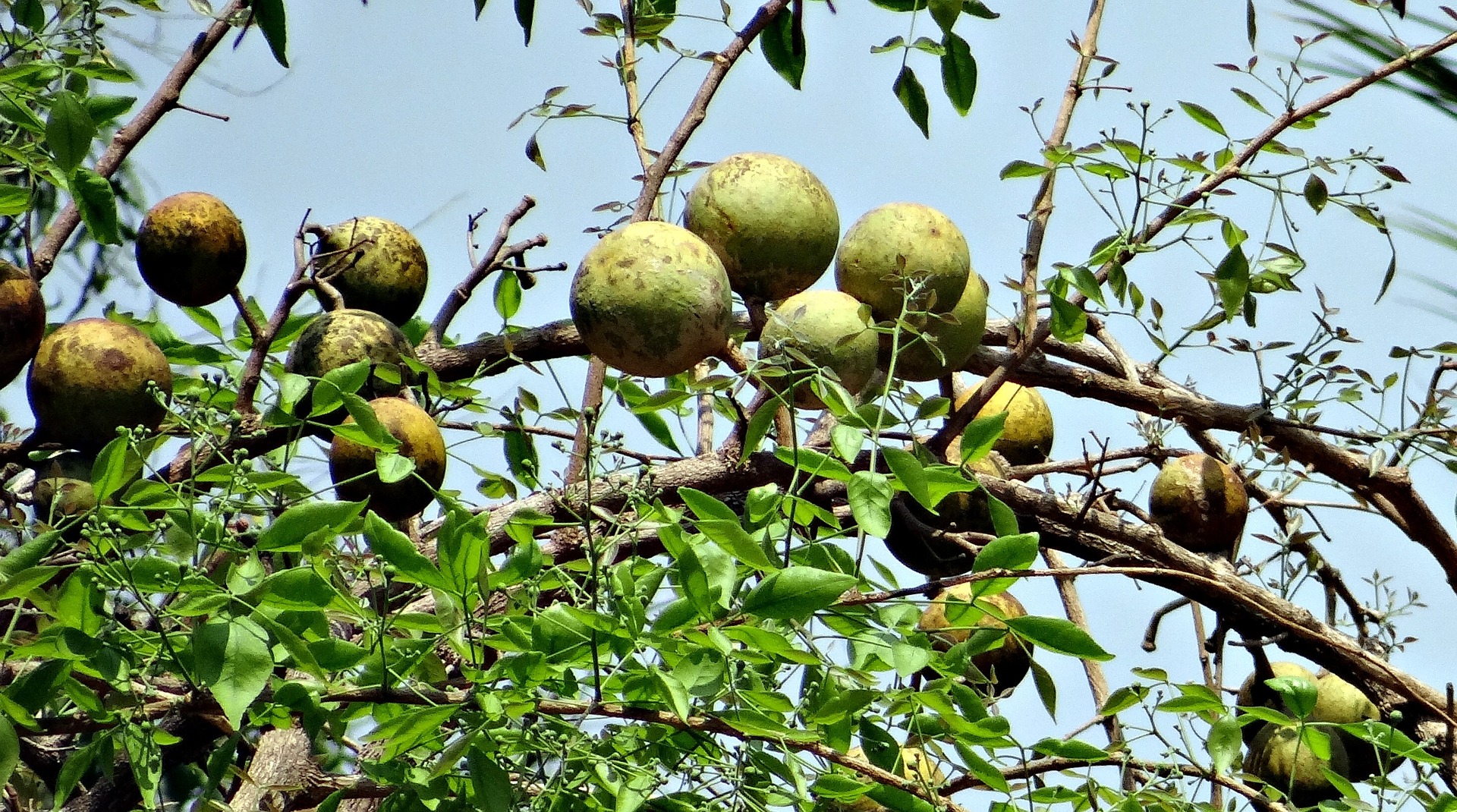
Bael, Aegle marmelos
पेड़ का नाम:- एगल मार्मेलोस, बेल पेड़
बेल पेड़ का इतिहास:
एगल मार्मेलोस जिसे सामान्यत: बेल पेड़ कहा जाता है, भारतीय उपमहाद्वीप का मूल पौधा है। इसका भारत में कृषि और चिकित्सा में उपयोग हजारों साल पुराना है। इस पेड़ को हिन्दू पौराणिक कथाओं में उच्च मान्यता है और यह अक्सर भगवान शिव के साथ जोड़ा जाता है। बेल के पेड़ के फल, पत्तियाँ और अन्य भाग भारत में हजारों साल से विभिन्न औषधिक और धार्मिक उद्देश्यों के लिए प्रयुक्त होते आ रहे हैं।
बेल पेड़ के बारे में तथ्य:
बेल पेड़ प्राथमिक रूप से भारतीय उपमहाद्वीप के देशों में पाया जाता है, जैसे कि भारत, नेपाल, बांग्लादेश, भूटान, और श्रीलंका। इसे विशेष रूप से दक्षिण-पूर्व एशिया और अफ्रीका के कुछ उष्णकटिबंधी और उष्णोपयोगिक क्षेत्रों में खेती जाता है।
बेल पेड़ एक पत्तादार पेड़ है जिसकी ऊंचाई लगभग 15 मीटर तक हो सकती है।
इसके प्रमुख फल का उपयोग बेवरेज और पारंपरिक मिठाई बनाने में किया जाता है।
बेल की पत्तियों को पवित्र माना जाता है और धार्मिक कार्यों में उपयोग होता है।
बेल पेड़ के औषधिक लाभ:
बेल का फल पाचन गुणों के लिए जाना जाता है और यह अक्सर विभिन्न पाचन संबंधित समस्याओं, जैसे कि दस्त और कब्ज, के लिए उपयोग किया जाता है।
इसे धातुगत सूजन और एंटीऑक्सीडेंट गुणों के लिए जाना जाता है, जिसके कारण इसका पारंपरिक चिकित्सा में व्यापक उपयोग होता है।
बेल की पत्तियों और निर्यासों का आयुर्वेदिक चिकित्सा में उपयोग मधुमेह, श्वास रोग, और त्वचा विकारों के इलाज के लिए किया जाता है।
पेड़ की छाल बुखार और अन्य बीमारियों के इलाज के लिए उपयोग की गई है।
कृपया ध्यान दें:
आपको किसी भी विशिष्ट स्वास्थ्य स्थिति के लिए इसका उपयोग करने से पहले स्वास्थ्य देखभाल पेशेवर से परामर्श करना चाहिए।
हमने यह सुनिश्चित करने के लिए हर संभव प्रयास किया है कि लेख में प्रस्तुत जानकारी सटीक और विश्वसनीय हो। हमने अपनी शोध प्रक्रिया के दौरान गूगल और पुस्तकों जैसे प्रतिष्ठित स्रोतों से परिश्रमपूर्वक डेटा एकत्र किया। हालाँकि, हम समझते हैं कि हमारे सर्वोत्तम प्रयासों के बावजूद कभी-कभी त्रुटियाँ हो सकती हैं।
इसलिए लेख को पढ़ते समय आपके सामने आई किसी भी अशुद्धि या संभावित त्रुटियों के लिए लेख की समीक्षा करने में आपकी सहायता का अनुरोध करते हैं। आपकी प्रतिक्रिया हमें गुणवत्ता और सटीकता के उच्चतम मानकों को बनाए रखने में मदद करने में अमूल्य होगी।
आपके समय और समर्थन के लिए धन्यवाद
Name of Tree: - Bael, Aegle marmelos:
History & Origins
Aegle marmelos, commonly known as the Bael tree, is native to the Indian subcontinent. It has a long history of cultivation and medicinal use in India, dating back thousands of years. The tree is highly regarded in Hindu mythology and is often associated with Lord Shiva. The fruit, leaves, and other parts of the Bael tree have been used for various medicinal and religious purposes in India for centuries.
Facts about Aegle marmelos:
Aegle marmelos is primarily found in countries within the Indian subcontinent, including India, Nepal, Bangladesh, Bhutan, and Sri Lanka. It is also cultivated in other tropical and subtropical regions worldwide, including parts of Southeast Asia and Africa.
The Bael tree is a deciduous tree that can reach a height of up to 15 meters.
It is known for its distinctive, hard-shelled fruit, which is often used to make beverages and traditional sweets.
The leaves of the Bael tree are considered sacred and are used in religious ceremonies.
The fruit is rich in nutrients and has a range of health benefits, which has led to its widespread use in traditional medicine.
Medicinal Benefits of Aegle marmelos:
The Bael fruit is known for its digestive properties and is often consumed as a remedy for various gastrointestinal issues, including diarrhea and constipation.
It is also used in traditional medicine for its anti-inflammatory and antioxidant properties.
Bael leaves and extracts are used in Ayurvedic medicine to treat diabetes, respiratory problems, and skin disorders.
The bark of the tree has been used to treat fever and other ailments.
Please attention:
You should consult a health care professional before using it for any specific health condition.
We have made every effort to ensure that the information presented in the article is accurate and reliable. We diligently collected data from reputable sources like Google and books during our research process. However, we understand that despite our best efforts, errors may occasionally occur.
Therefore, we request your assistance in reviewing the article for any inaccuracies or possible errors you encountered while reading the article. Your feedback will be invaluable in helping us maintain the highest standards of quality and accuracy.
Thank you for your time and support.